Monday, February 27, 2017

Reviews of books by LeGuin, Pratchett, White, and Brodien-Jones -- two of them wonderful, one okay, and one not so much.


LeGuin, Ursula K. (1970) The Tombs of Atuan. New York:  Aladdin.

Image result for the tombs of atuan

Opening lines:
“Come home, Tenar!  Come home!”
In the deep valley. In the twilight. The apple trees were on the eve of blossoming; here and there among the shadowed boughs, one flower had opened early, rose and white, like a faint star.

Tenar is taken from her home as a little girl to serve in the temple.  There she slowly becomes a servant to the God thought to reside there, and her life becomes dark and twisted.  When the wizard Ged arrives, she helps to trap him in the labyrinthine maze under the temple, but she begins to develop compassion for him as he seems to be starving to death. Before long, however, the reader begins to wonder who is saving whom. 

It is easy to see why this is considered a classic (and why it won a Newbery Honor.)  Le Guin is a master at crafting a world and setting her characters into it so that it feels natural.  The story is gripping without being a frenetic run from one cliffhanger moment to the next (as many modern action adventure novels are.  Instead, it just grabs hold of the reader and will not let do.    

This book would be ideal for advanced middle school readers or high school readers.  Those familiar with fantasy will have the easiest time here.  There is nothing particularly offensive in the book, save mention of the evil god in the beginning.  Since Ged saves Tenar from serving him, I think anyone familiar with the whole story would not have a problem with it. 


Pratchett, Terry (2015) The Shepherd’s Crown.  New York: Harper.
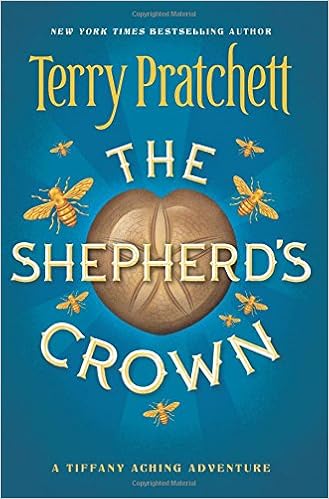
Image result for The Shepherd's Crown

Opening lines:  “It was one of those days that you put away and remember.  High on the downs, above her parents’ farm, Tiffany Aching felt as though she could see to the end of the world.”
My friend Kris first introduced me to the Tiffany Aching books, and she lent me this one too.  In this one Tiffany must continue serving as the wise woman of two villages (even though she isn’t that old,) stop an invasion of evil elves, and, as usual, manage her unpredictable and overenthusiastic allies, the Wee Free Men – eight inch tall, hard-drinking celtic creatures who look out for her, protect, her, and occasionally get her in big trouble.
The story is great, but the writing is exceptional.  Pratchett manages to explore important themes without ever taking himself or the story too seriously.  At one point, after Tiffany rescues an evil elf princess called Nightshade, who has been thrown out of the faerie realm and is trying to learn about human life, there is this exchange:
“’I have been watching humans,’ said Nightshade…, ‘and I can’t understand them.  I saw a woman giving an old tramp a couple of pennies… Why would she do that? How does it help her?  I don’t understand.’
‘It’s what we do,’ said Tiffany.  ‘The wizards call it empathy.  That means putting yourself in the place of the other persona and seeing the world from their point of view.’” (p 203)  A [age later, Tiffany is trying to talk the elf out of robbing a bank to give money to the old woman.
But look, that disconnected summary doesn’t give you any idea of what reading this book is like.  It is delightful, funny, and gripping all at the same time. 
This book is probably best for 8th grade and up.  There is nothing particularly offensive in it, although Tiffany and others like her sometimes call themselves witches.  Some parents might object to the depiction of witches – though they do not do any evil or sacrifice toads or whatever.  Tiffany mostly just tries to keep the land safe and care for the people on it.
Read it if you have a moment.  This one is a good one.

28 February 2017
White, Ruth (2003) Tadpole.  New York: Dell Yearling.
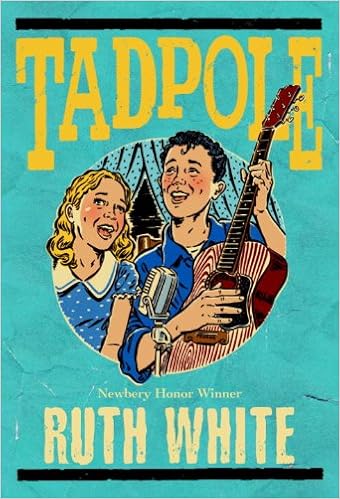
Image result for tadpole book white

Opening Lines:  One day in June, Mama found this ad in the paper: permanent waves one $ Sat morn come early.  And there was an address for a boarding house in Riverbend.”
Carolina Collins always feels inferior to her older sisters.  Kentucky is more popular than Caroline; Virginia is more attractive; and Georgia is smarter.  When their guitar-playing cousin Tadpole shows up at her house one day, looking for a place to lay low from his abusive uncle, he shakes up the town and Carolina begins to see that maybe she has a talent for music, and a way to stand out from her sisters,   Past of the charm of this story is the way that it paints life in their little town as both heartwarming and a really difficult place to scratch out a living. 
This story is perhaps best for fifth grade and older.  It is more likely to become a favorite of the girls, but boys would like the story as well.  It might well make a good read aloud.

There is nothing particularly offensive here, though child abuse is discussed, though not graphically described.  


Christine Brodien-Jones; Kneen, Maggie (2010)  The Owl Keeper.  New York:  Scholastic.

Image result for The Owl keeper

Opening Lines:  “When Max first saw the girl that night, standing beneath the owl tree, he thought she was a ghost or a vision, or maybe a comic-book character come to life.  It didn’t occur to him that she might be real.”
            Max is being raised in some weird world where an oppressive government is trying to kill off all the owls.  He is being fed poisoned food that seems to sort of interfere with his memory.  He is being watched.
            But since his watchers don’t seem to pay attention to him at night, he often sneaks out and goes to the owl tree where one night he meets this mysterious girl and together (along with an owl) they decide to go on a quest to try to find Max’s Gran and the Owl Keeper who could save them all.
            This world and these characters just don’t hold up real well.  I don’t know what motivates the good guys.  Sometimes I am not even sure what motivates Max.  And the conclusion is inconclusive.  It isn’t that it is a bad book, it is just that there are so many better books out there.  Why waste your time with this one. 

Wednesday, February 8, 2017

English legend in a fantastic new graphic novel, a classic fantasy novel, and a new weekly comic magazine!

I have always loved the legend of King Arthur.  Books like T.H. White's The Once and Future King and John Stienbeck's The Acts of King Arthur and his Noble Knights first caught my imagination with tales of bravery and good versus evil and intrigue and so on.  Recently I stumbled upon some versions of the King Arthur story that I had not read before.

Anderson, M.T.; Offermann, Andrea (2017) Yvain: The Knight of the Lion.  Somerville, MA: Candlewick.

Image result for yvain the knight of the lion

Opening Lines:
"I shall speak of love
and of hate
It is truely a marvel, but I tell you
hatred and love may live cramped together,
crouching in the same heart."

I'll confess -- M.T. Anderson fits in a fairly exclusive category of mine.  When I see a book with his name on it, I buy it without hesitation.  Many are familiar with his book Feed or perhaps the two book Octavian Nothing series.  Others may have encountered his delightfully absurd humor/adventure books about Jasper Dash and his friends (including Whales on Stilts, Jasper Dash and the Flame Pits of Delaware, and others.)  Nonficioin readers may have enjoyed his more recent Symphony for the City of the Dead which describes the life of composer Dmitri Shostakovich and the part he played in breaking the siege of Leningrad during World War Two.  Anderson is a remarkably versatile writer.

But I never could have guessed that he would write this graphic novel.  In Yvain, Anderson takes a nearly eight hundred year old poem by Chretien de Troyes and, working with artist Andrea Offermann, turns it into a remarkable adventure that will grab the imagination of a new generation of readers.  The story concerns Yvain, one of the knights in King Arthur's court, who rides out to avenge his cousin's honor, enters a strange land, and accidentally kills the king of that land.  When he falls in love with the grieving queen, he sets out to prove his honor and win her hand.  What follows has all the magic, heroic battles, intrigue, and excitement that I remember from reading Sir Thomas Mallory's Morte d'Arthur.  

Offermann does a nice job with a style that reminds the reader of tapestries and illuminated manuscripts, but also showcases Yvain's strength and skill in battle, and insecurity and confusion when he realizes he has done wrong.

There is a bit of violence here, but nothing excessively gory.  My guess is that this book is best for fourth graders and up. Although there are some heroic female characters, the book may appeal slightly more to males than females. There is nothing here that would cause any reasonable person to challenge the book.

Did I mention that Yvain rescues a lion from a dragon and the lion becomes his companion?  What could be cooler than a knight in armor going into battle with a lion at his side?


Lawhead, Stephen R. (1989) Arthur.  Westchester, IL:  Crossway.


Image result for arthur stephen lawhead

Opening Lines:

"Arthur is no fit king.  Uther's bastard, Merlin's pet, he is lowborn and a fool.  He is wanton and petty and cruel.  A glutton and a drunkard, he lacks all civilized graces.  In short, he is a sullen, ignorant brute
     "All these things and more men say of Arthur.  Let them.
     "When all the words are spoken and all the arguments fall exhausted into silence, this single fact remains: we would follow Arthur to the very gates of hell and beyond if he asked it.  And that is the solitary truth."


I cannot remember if I read Lawhead's trilogy when I was younger.  I suspect I did.  I can't remember even the slightest scrap of it, though.  So when my friend Kris loaned it to me, I decided to give it a try.  Lawhead has two earlier books in this trilogy: Taliesin and Merlin.  I skipped to the third book because I wanted to read of Arthur.

And that is what I got.  Here is the story of Arthur from the time he pulls the sword form the stone to his rise to power and eventually his fall.  This version concentrates on the battles and how Arthur's mastery of military strategy allows him to win battles in which he is greatly outnumbered or disavantaged.  Lancelot does not appear in these pages, nor does his infidelity with the queen Guenivere (here she is named Gwenhwyvar).  In fact, Lawhead's version of the queen is much more interesting that the usual version -- in which she is a vision of beauty blessing the various knights who battle over her favor.  Here she is a fierce Irish warrior queen, and nearly a match for Arthur on the battlefield. All the other elements of the legend are present though.  I found myself despairing when Arthur's kingdom began to fall apart, and then delighting in the conclusion in which the once-and-future part of the story is nicely hinted at.

This is some pretty thick reading.  I would recommend it for high school students, though I imagine a determined middle schooler could make it through.  There is some sexuality obliquely described here, plenty of violence,, and some mild cursing (see the opening lines above).  Seasoned readers of fantasy, though, will take it in stride.  This is a good classic to have on hand.


This last one isn't a book at all.  It is a magazine series.

 Image result for the phoenix comic

You see, long ago in the forgotten mists of time, there used to be magazines like Dynamite and Pizzazz (in the US)  that featured short stories and comics and other things that were interesting for grade school kids.  Then those magazines vanished.  And while their spirit survies to some extent in Mad Magazine and American Girl Magazine and the like, these things are not the same.

 Then, as if from a forgotten planet or a dimension beyond human understanding, a British company has begun publishing The Phoenix.  It comes out once a week and features puzzles and some non-ficiton features, but mostly it is a series of serialized comic stories.  Each story develops in each issue, but then ends on a cliff-hanger, so that the reader has to wait it out until the next week's issue arrives.  Features like Lost Tales, Mega Robot Bros, and the Adventures of John Blake will grab elementary school reader's attentions.  I could not tell from the website whether it is possible to subscribe int he US, but the word is that they are working on a deal with Scholastic to distribute it in the US.  Feel free to check it out on thier website and, if you wish, leave them a note encouraging them to make it available throughout the globe.


Wednesday, February 1, 2017

Three classic children's novels that do not mention our current political troubles in any way.

It is getting harder and harder to escape the anger, insensitivity, vitriol, and horror of our current political situation.  Some people have called reading novels escapism.  But that is an inaccurate term.  Those of us who turn to reading fiction for solace do so not because we want to escape our problems and go to a happy land without conflict or difficulty.  Rather we want to trade the problems we face which we can do little about -- for the vicarious life of a character in a situation often even more dire than our own, who can and does do something that changes his or her world.  That is why we sometimes need to read.  Here are some classics that may help.


Farmer, Nancy (1994) The Ear, The Eye, and the Arm.  New York: Scholastic.

Image result for the ear the eye and the arm

Opening line:
"Someone was standing by his bed, a person completely unlike anyone Tendai had ever met."

Zimbabwe, 2194.  When his three children are apparently kidnapped, General Matsika seeks the help of three very unusual detectives, the Ear, the Eye, and the Arm, all possessed of unusual abilities.  But even as the detectives track the Tendai, Rita, and Kuda, the three children have escaped their captors and are trying to elude pursuers and may be running into more danger than they originally were in.  Somehow, both groups end up becoming involved in a conflict as old as humanity, where good and evil fight it out in the great city and it is up to both the misfit detectives and the children to save the country..

This story was gripping and thought-provoking enough in 1994 to win a Newbery Honor.  It has lost none of its excitement in the twenty plus years since it came out.  In fact, in today's political landscape of turmoil, students may find it refreshing to be in a desperate fictional battle between good and evil, knowing that in the end, good will prevail

This would make a good read-aloud for fourth or fifth grade.  Fifth graders through middle school would enjoy reading it themselves.  There is nothing particularly offensive or likely to be challenged in this book.  I recommend it.


Hill, Kirkpatrick (2002) The Year of Miss Agnes.  New York: Aladdin.

Image result for the year of miss agnes

Opening lines:
"What happens now?" I asked Mama as we watched the plane take the teacher away.
"Maybe no more school,"  Mama twitched her shoulder a little to show she didn't care.

The kids who attend the one-room school house in a tiny Alaskan village have gone through more teachers than they can count.  When Agnes Summerfield shows up one day, they find out what good teaching is like, but they all are wondering whether Miss Agnes will stay.

Look, maybe this will be easier if I just give you a quote form the book.  Here you go:

     "When Miss Agnes read to us, she did all the people in different voices and we forgot right away it was just reading.  It got real, like being inside the book.
      "I didn't want Miss Agnes to ever stop reading.  I felt as if I really was in that deep, dark forest with trees taller than you ever heard of.  And when she stopped, I felt shocked, as if I'd come out of a dream." (p. 39)

See?  It is a nice world to spend some time in and would make a great read-aloud for third through fifth grades.  Nothing objectionable here, except perhaps the vaguely imperialist notion that a white woman from England is teaching native Alaskans.  I prefer to think of it as reenforcing the notion that teachers care for thier students, period.

Read this.  It will make your world happier.


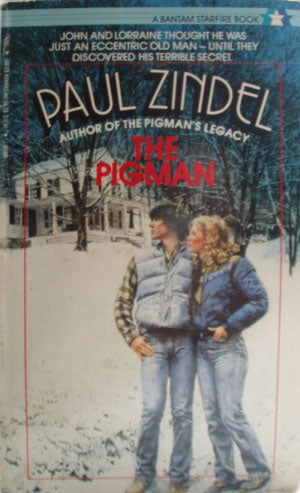
Zindel, Paul  (1968)  The Pigman.  New York:  Bantam. 


Image result for the pigman

Opening Lines:
"Being of sound mind and body on this 15th day of April in our sophomore year at Franklin High School, let it be known that Lorraine Jensena and John Conlan have decided to record the facts and only the facts about our experiences with Mr. Angelo Pignati."

All right, this may not be quite as much of a recommendation as the other two.  But some readers may remember this one from their own high school experience and may enjoy returning to a realistic novel and characters whose challenges seem almost quaint in light of what we deal with in today's world.  I think maybe The Pigman is an acquired taste.  And to be honest, this book has not worn as well as the last one.  Kids today may have trouble figuring out what it means when one character says to another "You're such a card".  Lorraine's fascination with psychology and analysis may also seem very much out of date.  The way Lorraine's mother resigns herself to putting up with sexual harassment a the workplace may be authentic, but is also depressing.  Some students may have trouble relating to the sixties-style experimentation attitude that leads Lorriane and John to throw a party at the Pigman's house when he is in the hospital without so much as thinking about it.  Finally, depending on your reading of the book, it may seem to end without much hope for the future of the characters at all.

Having said that, the book alternates between the voices of John and Lorraine and the very different way in which they see the same events is certainly intriguing.  Likewise, John's bad boy attitude may interest some readers as well.  There were parts in the book where I laughed out loud.  For a certain sort of reader, this book may connect in an authentic way.

This one is probably best for high school.  There are some vague sexual references and certainly a jaded and callous way of viewing the world, but little here that could invite a challenge in this day and age.


Monday, January 30, 2017

Three New Graphic Novels Worth Reading (Good for Science, Theology/philosophy, and English classes)

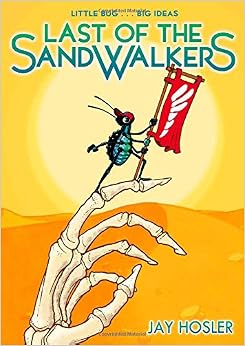
Hosler, Jay (2015) Last of the SandWalkers  New York:  First Second.

Image result for last of the sandwalkers

Opening Lines:

"Lucy's Journal.  February 15th, 1002 PC (Post Coconut)
            We left New Coleopolis this morning with no fanfare.  Leading the first mission to seek out life beyond our oasis should have been the greatest moment of my scientific carrer.  Instead we shuffled out of town like wriaths through the morning mists. It's just as well, though since most of our colleagues are convinced we will fail."

Joy Hosler is the amazing biologist/graphic novelist whose first work, Clan Apis, follows two worker bees that are part of a colony.  In Last of the SandWalkers, Hosler here gives us a much fuller story of several beetles who leave their safe home and go out into the desert on a voyage of discovery.  Lucy is the plucky leader. Professor Bombadier is her resourceful mentor, Raef is a robotic firefly, And Mossy is a relatively huge horned beatle.  Along with them is treacherous Professor Owen.  As they journey on what turns out to be an epic adventure, the reader learns a great deal about entomology in general and beetles in particular -- including about trap-door spiders, whirligig beetles, and what it is like to get caught in amber.  Not that the learning gets in the way of the story -- which has enough twists and turns and moments of danger to easily keep students' attention.

The images and panel movement draw the reader naturally into the story.  The art serves the story so well that it is easy not to notice how really accomplished the black and white drawing is.

This book is probably best for middle school and up and could be valuable for middle school and high school science and biology classes -- both as a classroom text to consider ecosystems and adaptation, but also as a supplementary book for kids who love to read.

These is nothing here likely to cause a challenge -- though extremely careful readers may catch that Hosler takes a swipe at the sort of fundamentalist religion that sets itself up in oppostiion to science -- but because it is a made-up beetle religion and doesn't appear to be targeting any particular faith, it is unlikely anyone would object.

This is a really good one.


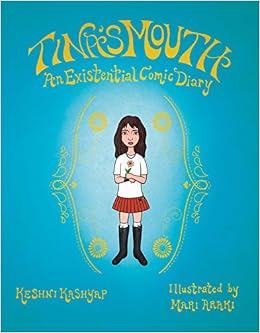
Kashyap, Keshni; Araki, Mari ((2012) Tina's Mouth:  An Existential Comic Diary.  New York:  Houghton Mifflin.

Image result for tina's mouth an existential comic diary

Opening Lines:  "January 26.  Dear Mr Jean Paul Sartre,  I know that you are old and dead and also a philosopher.  So, on an obvious level, you and I do not have a lot in common."

So begins Tina's Mouth, a graphic novel that takes us inside the life of a high school sophomore trying to make sense of religion and beleif  and the meaning of life by keeping a diary of her existentialism. She tries to make sense of all this while living through losing friends, having crushes, losing crushes, and trying to figure out how life works.

The book is just barely a graphic novel.  Some pages have a single image and a large section of separated text.  Instead of regular panel movement, there are sometimes inset panels in panarama double-page spreads.  The lettering is typeset instead of drawn, and the illustration sometimes reminded me of paper dolls in that they seemed to have a limited range of movement.

Tina's search for meaning and friends and love is touching and certainly evocative of the searching that many readers may remember from their young adulthood.  There is no real resolution of Tina's search, though, save an acceptance that she doesn't really understand existentialism and that her search will go on.

This book is probably best for high school-aged readers, though teachers should be warned that there is enough vulgar language here that a parental challenge might be likely.  The language is nothing more than you would hear in many high school campuses, though other than verisimilitude, it doesn't seem to serve any thematic purpose.

This might be a good one to check out from your local public library before buying.


LaBoucane-Benson, Patti; Mellings, Kelly (2015) The Outside Circle.  House of Anansi Press.

Image result for the outside circle

Opening lines:  "Today is the first day of the Warrior Program.  We are going to start today with a smudge and a prayer.  It's important to make these offerings as we ask the creator for help."

Pete Carver is an indiginous Canadian whose one wish in life is to take care of his younger brother Joey. Pete's mom is a heroin addict.  Pete himself runs with a gang and is involved in selling drugs.  When his girlfriend tells him she is pregnant, he tells her the baby probably isn't his and kicks her out of the car.  Then one night, during a fight with his morher's boyfirend Dennis, things get out of hand, Pete kills Dennis and is sent to jai.  Pete asks his fellow gang members to take care of his little brother.  In prison, things get worse.  When Pete find out the gang is putting Joey at risk and there  is nothing he can do about it, he is ready to do something rash.  Instead he finds out about a rehabilitation program that uses traditional tribal worship to help people learn to deal with their anger and get themselves straightened out.  Pete has to face his brokenness, acknowledge his anger, and eventually make a choice aobut how he wants his life to go.

The art in this book is beautiful.  The story is engrossing (it isn't an easy journey for Pete at all).  The scenes are painful to look at sometimes, but in order to value Pete's eventual triumph, we have to be there in the bad parts too.

There is some vulgar language in here, but it expresses the hardness of Pete's world and his own bitterness, and it is something I would fight for.  This book might be a good choice for a high school English classroom, especially when paired with another book about mistakes and redemption (Paul Fleishman's Whirligig for example).  This one is well worth buying. 


Friday, January 20, 2017

Three quick reviews -- good books for middle elementary

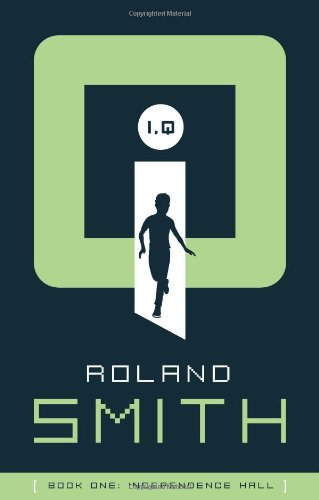
Smith, Roland, (2008)  IQ: Independence Hall.  Ann Arbor:  Sleeping Bear Press

Image result for iq roland smith

Opening lines:  "From a window across the street, Eben Lavi watched the couple and the two children leave their loft and climb into the back of a white limosine.  It pulled away from the curb and started down the street.  A moment later a blue SUV fell in behind the limo, three cars back, and began to follow."

Q and his step-sister Angela are the children of famous rock star parents.  When they are on tour with their parents, the coach bus breaks down and an old drifter shows up and fixes it.  Their parents explain that the drifter is actually Boone, and old roadie friend of theirs.  Soon Q and Angela find out there is more to Boone than meets the eye and before they know if they are caught in the crossfire between Israeli secret-service operatives and a group of ex-FBI mercinaries.  And underneath it all are some surprising revelations about Angela's late mother.

This book has all the excitement of an action adventure spy movie, but, one that is maybe with the violence is toned down, a bit more humor, no offensive language and a story that is perhaps a little easier to follow than a typical YA spy novel.  There are several other books in the series.  This is a good one for stronger readers in fourth and fifth grade especially.   I suppose some parents might object to the way that Q and Angela deceive their parents from time to time.


Quattlebaum, Mary (1996) Jazz, Pizzazz, and the Silver Threads.  New York:  Bantam.

Image result for Jazz, Pizzazz, and the silver threads

Opening lines:  "Each time Jenny clicked her magic wand against the table and --whoosh-- a scarf appeared, Calvin felt his attention click up from his history book and whoosh away."

Okay, so the writing on this book didn't win any awards, and the story isn't utterly gripping, but it is about a nine-year-old boy named Calvin whose quest for a pet leads him to care for his nieghbor Jenny's pet hamster, and, when that plan goes awry, Calvin is soon organizing a jazz concert with geriatric dancers in a desperate bid to keep the hamster.  Wacky hijinks ensue.

This is a story that may well make seven- to ten-year-olds laugh.  They may enjoy the social interaction in the book.  And it is short enough at 120 pages that it might be managable for a struggling reader.  Plus it involves a pet hamster.

Nothing offensive here at all.


Gannett, Ruth Stiles (1948) My Father's Dragon  New York: Random House.

Image result for My Father's Dragon

Opening Lines:  "One cold rainy day when my father was a little boy, he met an old alley cat on his street.  The cat was very drippy and uncomfortable so my father said, 'Wouldn't you like to come home with me?'"

So begins the story of the father, Elmer Elevator, who undertakes a mission to Wild Island to rescue a dragon that is unjustly imprisoned there.  For this vital mission, Elmer packs into a backpack: "...chewing gum, two dozen pink lollipops, a package of rubber bands, black rubber boots, a compass, a toothbrush and toothpaste, six magnifying glasses, a very sharp jackknife, a comb and a brush, seven hair ribbons of different colors, an empty grain bag with a label saying "Cranberry", some clean clothes, twenty-five peanut butter and jelly sandwiches and six apples."  The story which follows is improbable, involves outwitting animals, ends with a freed dragon, and is silly and sure to be a hit with first and second graders who have good senses of humor.

This is a classic.  Nothing offensive here.  Might be worth a look.


Friday, January 13, 2017

Two Graphic Novel Collections that are Kind of Cool and the Return of the Stratford Zoo

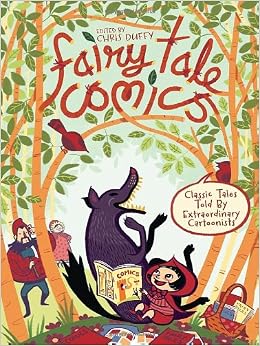
Duffy, Chris (ed.) (2013) Fairy Tale Comics.  New York:  First Second.

Image result for Fairy Tale Comics

Opening lines:  Once upon a time there was a poor little girl named Emma who lived in a poor little town where everyone was hungry and spent their days dreaming of sweet porridge."

This book has seventeen fairy tales, each illustrated in graphic novel form by a different artist.  Here you will find well-known standards like "Little Red Riding Hood" (adapted by Gigi D.G.); "Snow White" (adapted by Jaime Hernandez), "Rapunzel" (adapted by Raina Telgemeier) and others.  There are also some tales that might be unfamiliar to you.  I particularly liked "The Prince and the Tortoise" (adapted by Ramona Fradon and Chris Duffy), "Give Me the Shudders" (adapted by David Mazzucchelli) and "Azzolino's Story Without End" (adapted by Chris Thompson).

I can't say every single story in here will be to your taste, but the vast majority of them take you quickly into the world to the fairy tale and illustrate the stories in a way that is compelling, funny, and faithful.

The age level for this one is a bit tricky.  It is far easier to read aloud a picture book than a graphic novel (though it can be done), and there are some visual puns that the littlest kids won't get -- but I am guessing tht there are some stories in here that would be well-suited to kindergarten or first graders, and other stories that would grab older students in third or fourth grade.  Middle school and high school students might be able to use it as a reference (I remember asking my drama students to present a folk tale or fairy tale and being surprised how unfamiliar they were with the genre.)

This is a beautiful, silly, and sometimes just-a-tiny-bit-scary book and worth picking up.


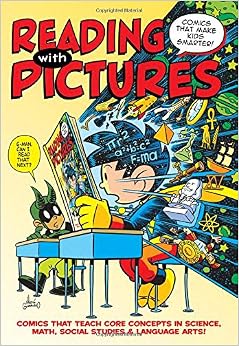
Josh Elder (2014)  Reading with Pictures:  Comics that Make Kids Smarter. Kansas City: Andrews McMeel Publishing

Image result for Reading with Pictures: Comics that Make Kids Smarter

Opening lines:  "Fifteen years ago I began teaching high school and self-publishing comics at around the same time"  (From Gene Yang's Forward.)

It is kind of a paradox.  We learn so much from reading stories, without even working at it.  But when stories are written to try to teach us something, we sense the inauthenticity and the lack of faithfulness to the story and we reject the teaching.

This book began with a cool idea -- use the graphic novels format, which kids enjoy so much, to engage kids in school subject areas.  However, each piece in this collection has to make a decision about where in the continuum from being mainly about the story to being mainly about the content being taught.  And where they come down on that line determines whether each story works or doesn't.

The first story in the collection, for example, "G-Man: Reign of the Robo-Teachers" is a fun little story of what happens when robots take over the teaching duties in a school and the kids hack into their operating system.  It is a great story with colorful and interesting art.  I doubt there is much academic content to learn from this one, though.  The very next story, "The Power of Print" reads like a dull filmstrip about how humans devleoped writing.  Lots to learn here, but nothing like an engaging story, particularly with lines like "Writing has allowed for the development of society -- would we have cities and governments without a written language?"  The artwork, in evenly-spaced panels and consisting of a subdued wash of color does little to grab us either.  Most of the stories fall somewhere in the middle, as in the story of "Albert the Alien" which uses a class scenario with a foreign exchange student from another planet to teach about idioms and literalism for language arts class.

The other issue for teachers with this collection is that, even though it has 16 different stories covering language arts, science, mathematics, and social studies, that only works out to three or four stories per subject.  So while it is a good book for the back of a third through sixth grade classroom, it is not the sort of book that would likely be used to teach a lesson or a unit.


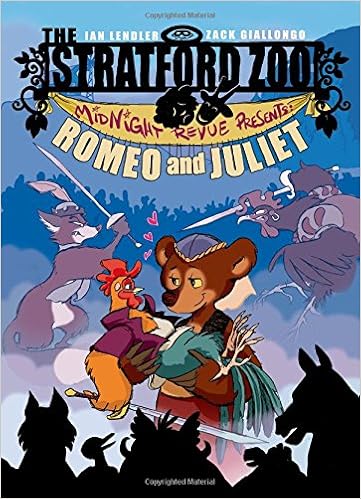
Lendler, Ian; Giallongo, Zack (2015)  The Stratford Zoo Midnight Revue Presents Romeo and Juliet.  New York:  First Second

Image result for Stratford Zoo Midnight Revue Presents Romeo and Juliet

Opening lines:  Banner:  Big Bill Shakespeare's Romeo and Juliet:  A most excellent and woeful tragedy!  A tale of ancient grudges and the true love of good friends.
Little Monkey: "Mom, what's a woeful tragedy?."

The first book in this series, an adaptation of Macbeth, was hilarious.  This one is at least as good and maybe better.  The zoo animals of the Stratford Zoo are once again putting on a play.  This time it is about Romeo the Rooster, prince of the petting zoo, who meets Juliet, a bear from the woods, and they decide they want to be friends.  Unfortunately, bears can never be part of the petting zoo, and if creatures from the petting zoo come to the forest, they will be eaten alive.   Star-crossed lovers indeed.

Lendler and Giallongo handle the violence in the play in a way that uses humor to avoid anything that might be troubling.  For example, after the death of Mercutio, Romeo grabs a sword and flies at Tybolt the fox, but at that moment, two elephants arrive late for the play and as they are crossing to their seats, we miss the entire battle.  The next panel shows Tybolt the fox lying on the ground with his tongue hanging out, hands clasped over his chest, holding a lily, and Romeo the Rooster standing over him with a sword saying "Whoops."

I don't know what age the book was originally intended for, but it seems to me it would work well with third grade and older.  There is no offensive violence in the book, though there is a point where a donkey character is rightfully called an ass, and another point where Juliet says, "Well, this sucks."  Most communities probably would not be terribly bothered by that though.

It is a great way for younger readers to tackle the story of Romeo and Juliet so they will be ready when they get to read the real thing.


Saturday, January 7, 2017

Children's Literature Booklist for this year

So this is the list of books that I will be using in Children's literature this year.  I think it will be the last year for Sherman Alexei's The Absolutely True Diary Part Time Indian.  It is such a good book, and I have kept it on the list for such a long time, but ten years old is pretty much my limit.

Anyway, here is the list:

Alexie, Sheman (2007)   The Absolutely True Diary of a Part-Time Indian.  New York: Little, Brown 
 
Image result for the absolutely true diary of a part-time indian

Barnett, Mac; Klassen, Jon (2012) Extra Yarn. New York: Harper Collins 
Image result for extra yarn

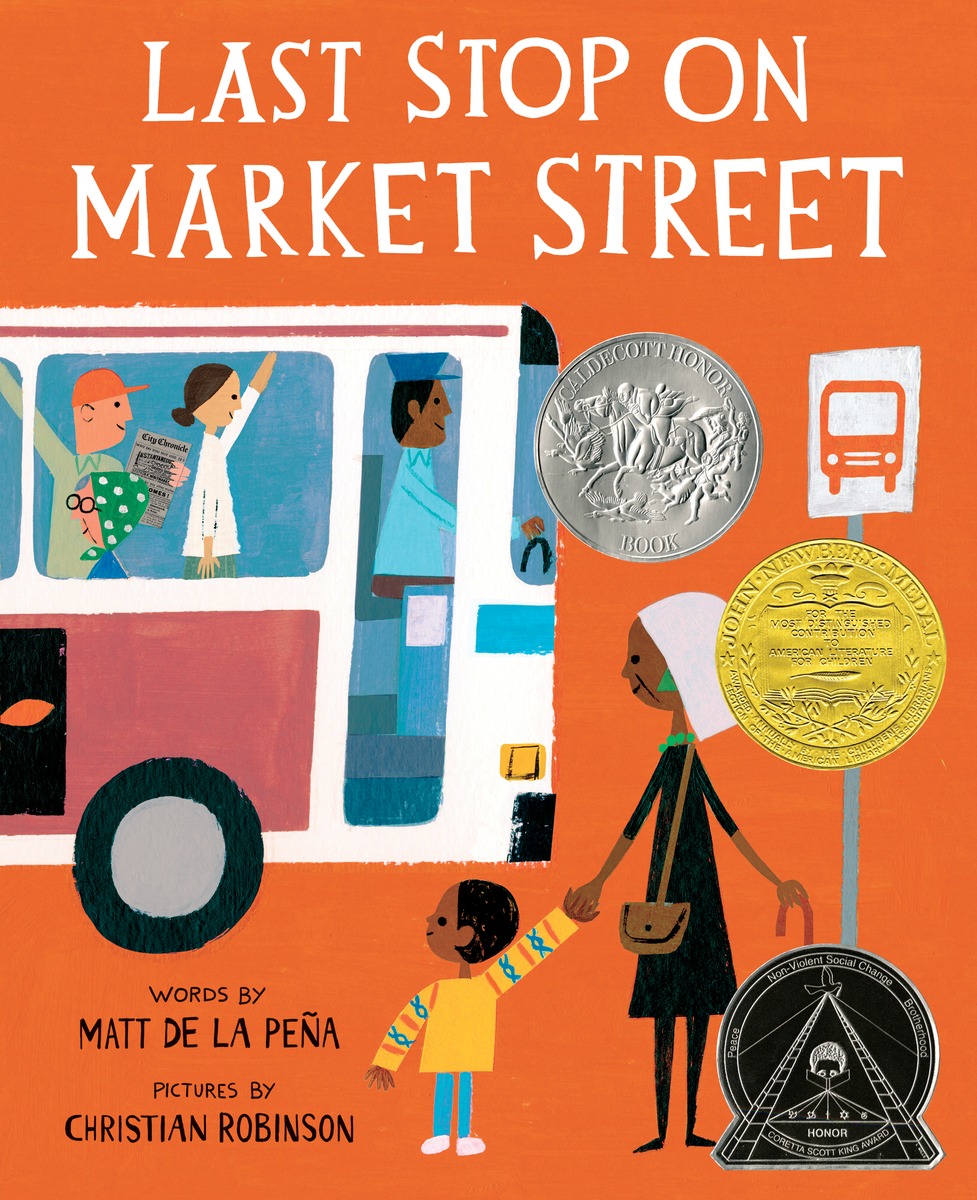
De la Pena, Matt (2015) Last Stop on Market Street.  Putnam. 
Image result for last stop on market street

Hatke, Ben (2016) Mighty Jack.  New York:  First Second. 


Jamieson, Victoria (2015) Roller Girl.  New York: Dial 
 

Klaasen, Jon  (2012)  This is not my Hat  New York:  Candlewick. 
Image result for this is not my hat

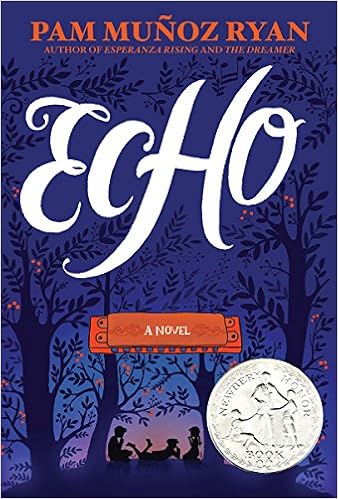
Ryan, Pam Munoz (2015) Echo. New York:  Scholastic. 
Image result for echo pam munoz ryan

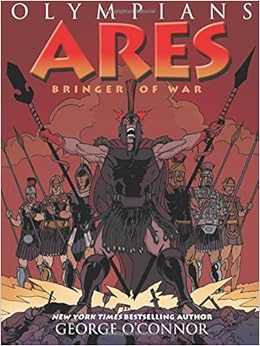
O’Connor, George (2015) Ares: Bringer of War.  New York: First Second. 
Image result for ares bringer of war
 

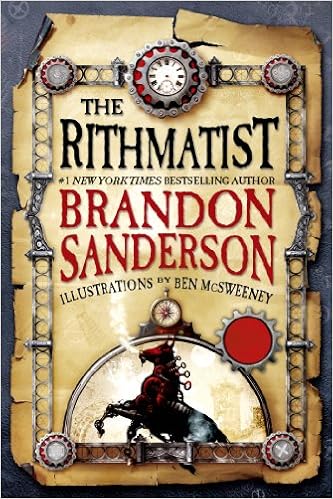
Sanderson, Brandon (2013) The Rithmatist.  New York: Tor
 Image result for The Rithmatist

Santat, Dan  (2014) The Adventures of Beekle, the Unimaginary Firend.  New York:  Little Brown 
Image result for the adventures of beekle

Schmidt, Gary (2011) Okay for Now  New York:  Clarion 
Image result for okay for now

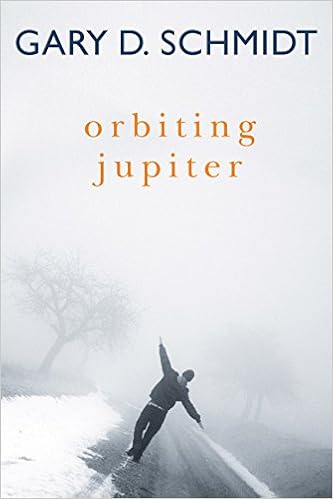
Schmidt, Gary (2015) Orbiting Jupiter. New York: Clarion. 
Image result for orbiting jupiter

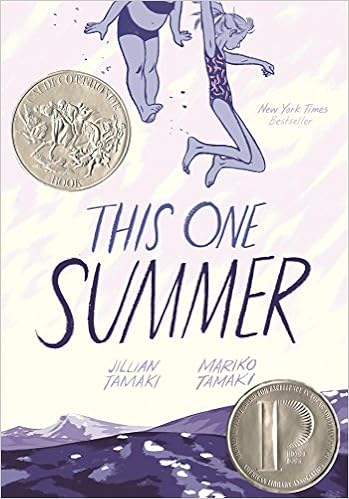
Tamaki, Jillian; Tamki, Mariko (2014)  This One Summer.  New York: First Second 
Image result for this one summer jillian tamaki

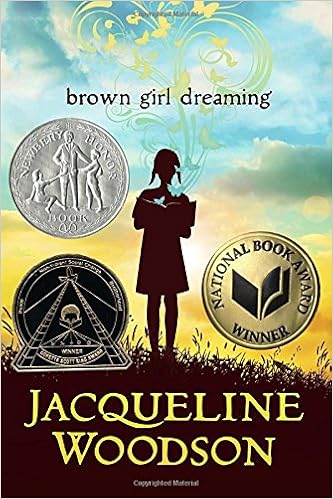
Woodson, Jacqueline (2014) Brown Girl Dreaming  New York: Penguin.
Image result for brown girl dreaming